After sharing my experience with burnout, I needed to take concrete steps to recover. It wasn’t a radical transformation overnight, but rather a series of small adjustments, realizations, and new habits that, when combined, are helping me regain balance.
In the first few days, I didn’t really know what to do. I was drained, lost, and simply followed my doctor’s recommendations: rest, distance myself from work, reconnect with myself, go for walks, and gradually resume physical activity. I needed to give my body and mind time to recover. But the real self-reflection came slowly.
It took me almost a month to realize that I wouldn’t get through this alone. That’s when I decided to seek help from a therapist. Admitting that I needed support wasn’t easy, but it was an essential step forward. Little by little, I also started talking about my situation to those around me. Before that, I was somewhat ashamed, I must admit. I was afraid of being judged, of appearing weak. But by discussing it with close friends and listening to the stories of others who had experienced burnout, I understood that I wasn’t alone. On the contrary, these exchanges helped me put things into perspective and accept what I was going through.
During the first two months, I also tried yoga. It was an interesting experience, but I’m not sure it’s something I see myself incorporating into my routine in the long term—at least for now. However, meditation had already been part of my habits for nearly a year. It was an essential tool that helped me stay afloat amidst everything I was going through. Without meditation, I think I would have broken down much sooner. But over the past month, I’ve felt less need for it. My daily walk has become my form of meditation—a time to recentre myself and reconnect, rather than sitting still in my living room.
I also became more aware of the importance of my physical well-being. Participating in Dry January was an eye-opening experience: it allowed me to be more in tune with my body and better understand how what I consume affects my energy and overall well-being. It wasn’t just about giving up certain habits but rather about learning to make choices that align more with how I feel.
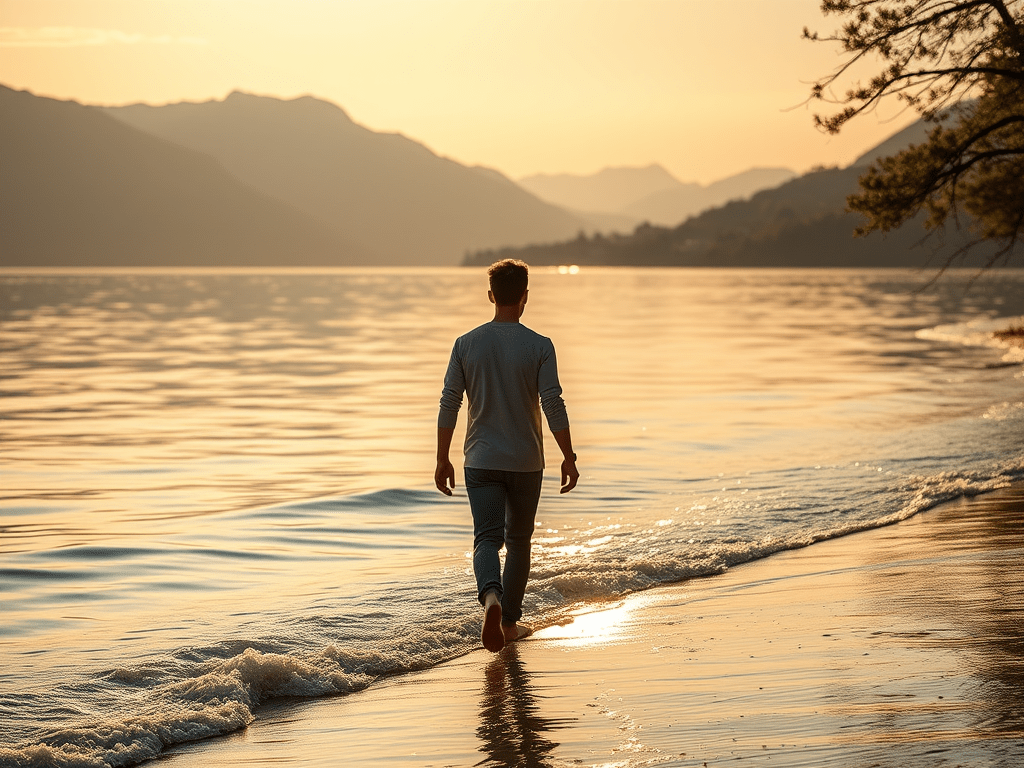
Very quickly, I felt the need to move and reconnect with my surroundings. So, I incorporated a daily walk into my routine. No phone, no music—just me and the landscape. Watching the magnificent Lake Geneva, observing how the light changes throughout the day, listening to the wind or the waves… These quiet moments and my connection with nature have become essential for clearing my mind and finding inner peace.
Rest has also taken on greater importance. I’ve learned to listen to my fatigue and respect my need for sleep. I established a more consistent routine, reducing screen time in the evening and creating moments of relaxation before bed. Gradually, I noticed a difference: deeper sleep, better recovery, and more stable energy throughout the day.
At the same time, I had to rethink how I managed my time. Instead of filling my days to the brim, I’ve learned to leave space, to stop overloading my schedule. I started prioritizing what truly matters and allowing myself breaks without guilt. It’s not always easy, but I can feel that it helps me be more effective without burning out.
Another key element in this process has been listening to the experiences of others who have gone through burnout. Hearing them talk about their journey, their doubts, and their realizations has helped me change my perspective on what I was experiencing. I understood that this burnout was not a failure but a signal. My mind and heart were telling me that it was time to reconnect with myself and what I love. We only have one life, and it is essential to live it fully—not based on others’ expectations, but in alignment with ourselves.
One video, in particular, stuck with me. The speaker used the example of the oxygen mask on an airplane: we are always told to put on our own mask before helping others. For a long time, this seemed strange to me, almost selfish. But now, it makes perfect sense. To take care of others—of my loved ones—I must first take care of myself.
Today, these new routines are not just temporary adjustments but real pillars that guide me daily. They help me move forward with greater serenity and clarity, and most importantly, they remind me of the importance of staying attentive to my own needs. Taking care of yourself is not a luxury; it’s a necessity. And this realization is perhaps the greatest gift that burnout has given me.
So, where am I now? Well, I’ve lost 3 kg—so that’s the physical part, haha. As for my mental well-being, I’m learning to recognize my limits and communicate them. However, this isn’t something that comes naturally to me, so it’s going to be a challenge for a while.
For now, this isn’t the hardest part. The real challenge will be returning to work while maintaining a healthy routine. Right now, I feel like I’m in a bubble, but stepping back into my professional life will be another test.
My last thought for this article is that I’m slowly starting to think about “what comes next.” And guess what? It’s not easy. Am I going to go back to doing things the way I did before? Definitely not. A lot needs to change, and I’m already making some changes, with more to come.
For those in the same situation as me: take care of yourself. This is my life, and I’m done trying to please everyone. I’m setting boundaries, and I’m taking care of myself and my loved ones.
And what about work? Work is important, but as many retired people realize when they leave the workforce—guess what? Work goes on without you, whether you’re there or not, whether you’re alive or not. The show must go on! So, don’t define yourself by your job.
Next time I introduce myself to an audience, I won’t say: “I’m Sylvain Jacquemard, I’m a CIO.” My work is not who I am. I haven’t figured out my new introduction yet (oh yes, another thing to work on, lol), but I know it won’t be that anymore.
Take care of yourself, and see you in another article.
 The Technology, The CIO Life and Me
Leave a comment